

SaaS Vendor Evaluation and the Searches Keyword Research Usually Misses
09 September 2026
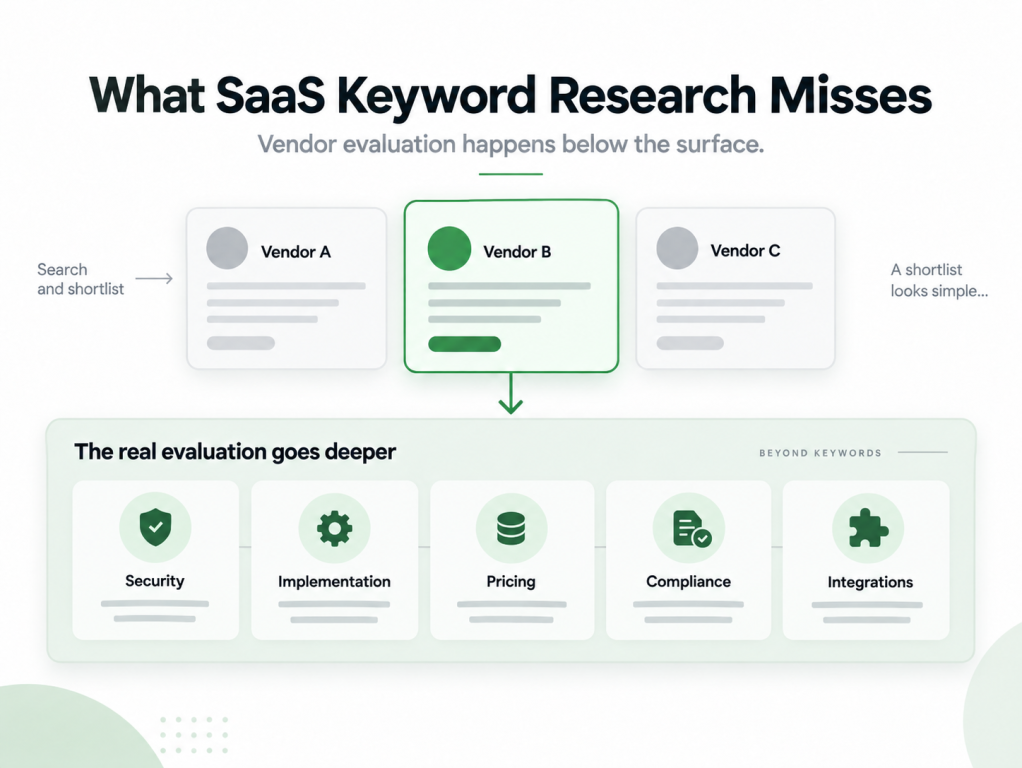
Article at a Glance The Main Points Enterprise SaaS search strategy needs to account for what buyers are trying to validate, not just the keywords with the highest measurable demand. 1 Preference Forms Before Sales Enterprise buyers often enter seller engagement with a preferred vendor already in mind. 2 Product Fit Is Only One Test Technical, operational, risk and economic fit can all determine whether a SaaS purchase progresses. 3 Keyword Tools Can Miss Validation Demand Highly specific security, implementation, pricing and procurement searches can matter commercially despite low aggregate volume. 4 Use the Buying Process as SEO Research Sales
Read moreSame Language, Different Markets: How SEO for Multiple Countries Works

16 July 2026
Many businesses approach SEO for multiple countries as though English were a single market. One page is expected to rank in the UK, the US, Australia, Ireland and Canada, even when buyers in each country search differently, compare different competitors and expect different proof before making an enquiry. Sometimes that is efficient. A single, well-built English page can be stronger than five regional versions that say almost the same thing. In other cases, one generic page becomes a compromise: relevant enough for several markets, but not the strongest result anywhere. The real question is not whether British users write “optimisation”
Read moreHow AI Search Changes B2B Shortlist Visibility Before Buyers Reach Your Website

11 June 2026
For years, B2B SEO focused on one goal: earning the click. Rank well enough, attract the buyer, then use the website to prove your value. AI search is changing that sequence. Buyers can now compare suppliers, explore solutions and narrow their options before visiting a single site. This does not make websites less important. It makes clarity more important. AI systems need to understand what a business offers, who it serves and what evidence supports its claims before they can surface it confidently. That creates a new B2B visibility challenge. Success is no longer only about ranking. It is about
Read moreWhat to Do With Low Search Volume Keywords in B2B SEO

12 May 2026
Low search volume keywords can make B2B SEO look less promising than it really is. A keyword with 20 searches a month may seem too small to matter, especially when compared with consumer markets where thousands of searches can sit behind a single phrase. But in B2B, volume is often a poor proxy for value. The searches that matter most are not always the ones with the biggest numbers. They are the ones that reveal a buyer is trying to solve a specific problem, compare possible approaches, validate a supplier or understand whether a solution fits their business. In complex
Read moreHow Logistics Websites Lose Shortlist Visibility When Warehousing Transport and Fulfilment Intent Are Blended Together
30 April 2026
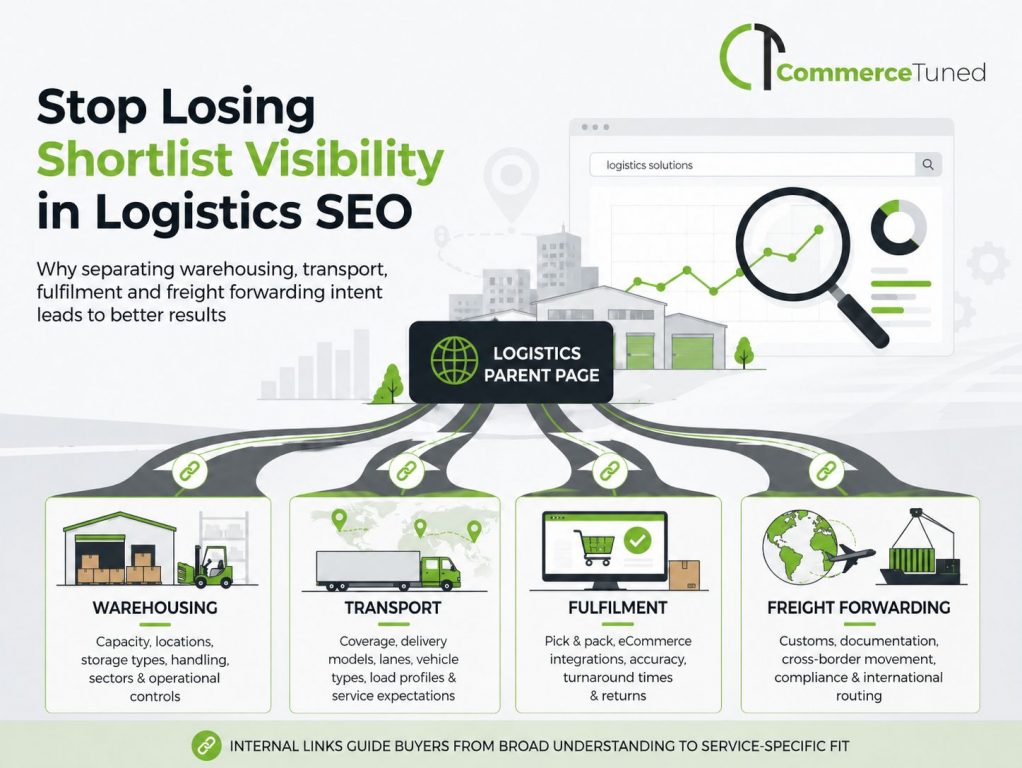
Many logistics websites do not underperform because demand is missing. They underperform because warehousing, transport, fulfilment and freight forwarding are collapsed into broad service pages that blur operational fit. A buyer may find the site, but still leave unconvinced. That is the commercial problem: visibility exists, but shortlist visibility stays weak because the page does not reflect how serious buyers compare suppliers. Why Logistics SEO Breaks When Different Service Intents Are Forced Into the Same Structure Warehousing, freight, fulfilment and transport sit close together in the same market, but they are not interchangeable in the buyer’s mind. Each one points
Read moreWhy Search Console Overlap Does Not Always Mean Keyword Cannibalisation
23 April 2026
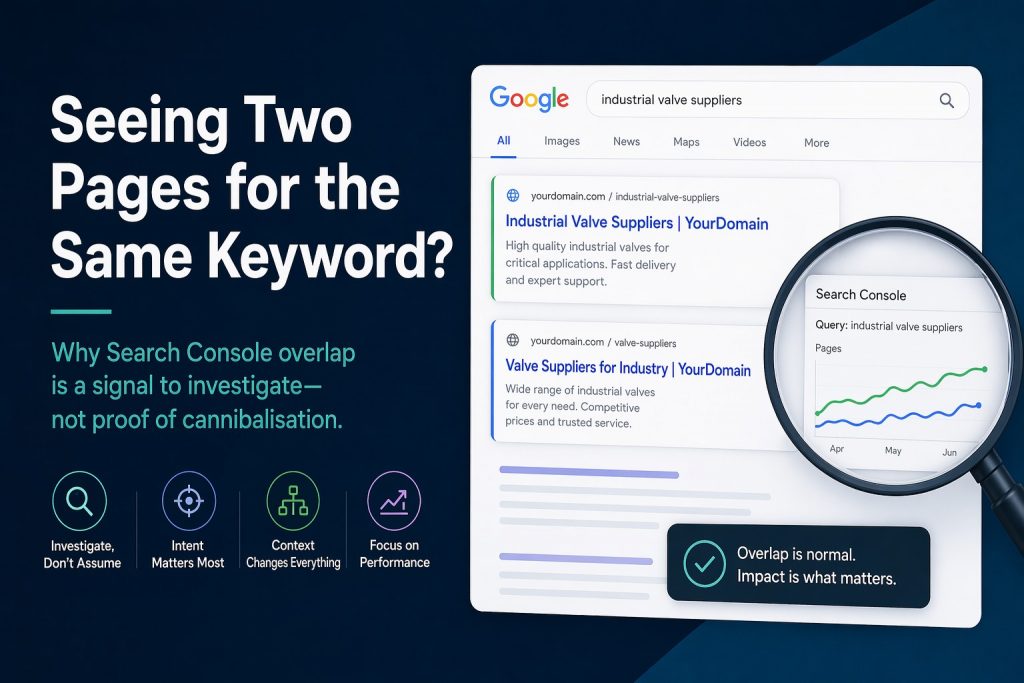
Keyword cannibalisation is one of the most overdiagnosed problems in SEO, especially when teams rely too heavily on Google Search Console. Two URLs appear for the same query, impressions start showing against more than one page, and the conclusion seems obvious: the site has a cannibalisation issue and one of those pages needs to be merged, redirected or rewritten. In practice, the diagnosis is rarely that simple. Multiple URLs appearing for the same keyword can mean several different things. Sometimes it reflects unstable page ownership and a genuine performance problem. Sometimes it is just a normal result of how Google
Read moreEntity-first SEO for B2B sites starts changing the plan long before you publish
14 April 2026
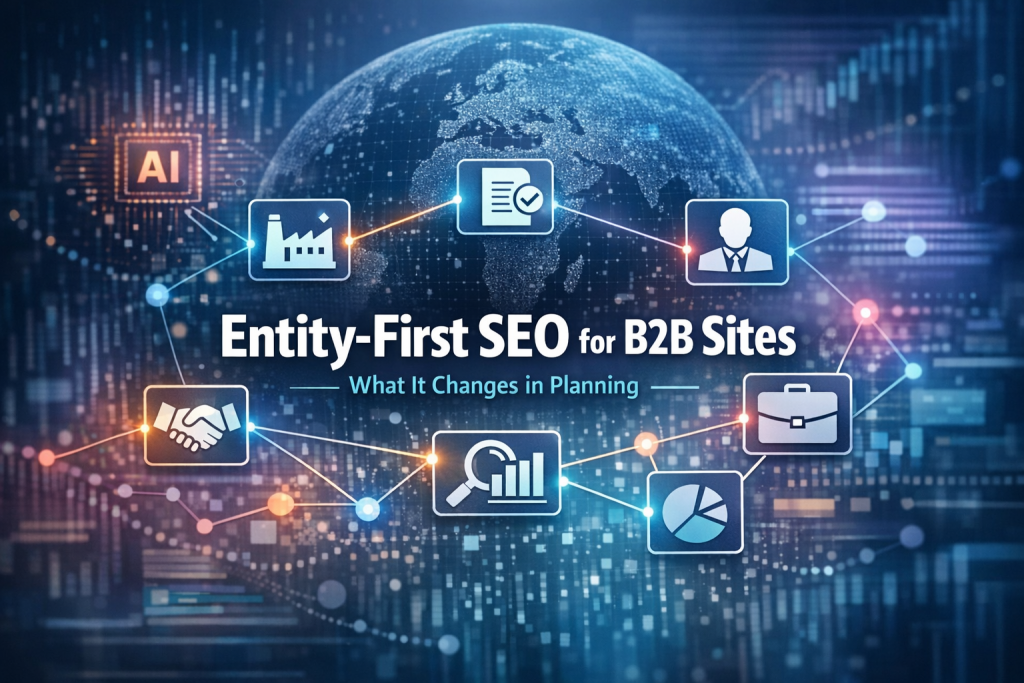
Entity SEO is often explained as a smarter way to help search engines understand meaning rather than matching pages to isolated keywords. That is true, but for B2B websites the more important point sits earlier in the process. Entity-first SEO changes how you plan the site in the first place. On many B2B websites, content is still scoped around keyword targets, rough funnel stages and a list of pages that feel commercially necessary. You end up with service pages, a few industry pages, scattered blog posts and the occasional case study, but the relationships between them remain weak. That is
Read moreBrand Reputation Monitoring Through Search Signals

09 April 2026
Brand reputation monitoring often gets treated as a review problem or a PR exercise, but many buying decisions start somewhere much quieter: a search results page. Before a prospect fills in a form, books a call or replies to an email, they often search your brand, your leadership team, your reviews and the claims you make. What they find in those moments can strengthen trust, create hesitation or quietly push them towards a competitor. Why Brand Reputation Monitoring Needs a Search Perspective Brand reputation monitoring is usually associated with mentions, sentiment, review platforms and social listening. Those all matter, but
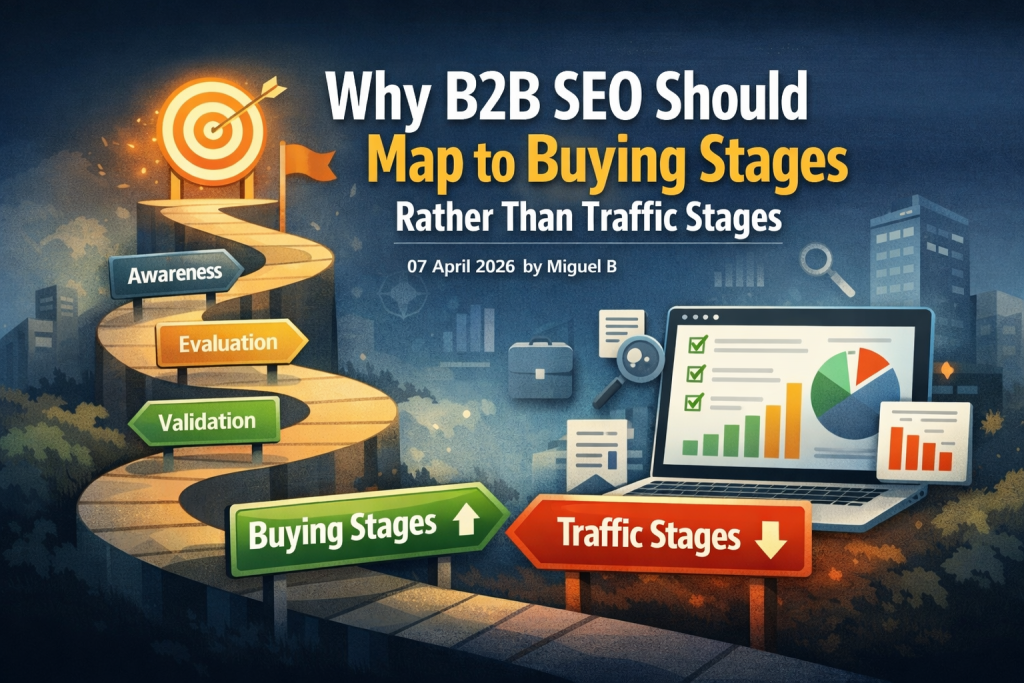
Read moreWhy B2B SEO Should Map to Buying Stages Rather Than Traffic Stages
07 April 2026
Most B2B SEO programmes are still planned around traffic opportunity. Teams cluster keywords by volume, prioritise what looks scalable, and report success through sessions, rankings and non-branded growth. It feels rational. It is also one of the main reasons B2B SEO often looks healthy in a dashboard while contributing less than expected to commercial progress. That happens because B2B SEO is rarely working inside a simple discovery-to-conversion funnel. B2B buying is slower, more fragmented and more political than that. Forrester has described this reality as buying mayhem, with 86% of B2B purchases stalling during the process, an average of 13
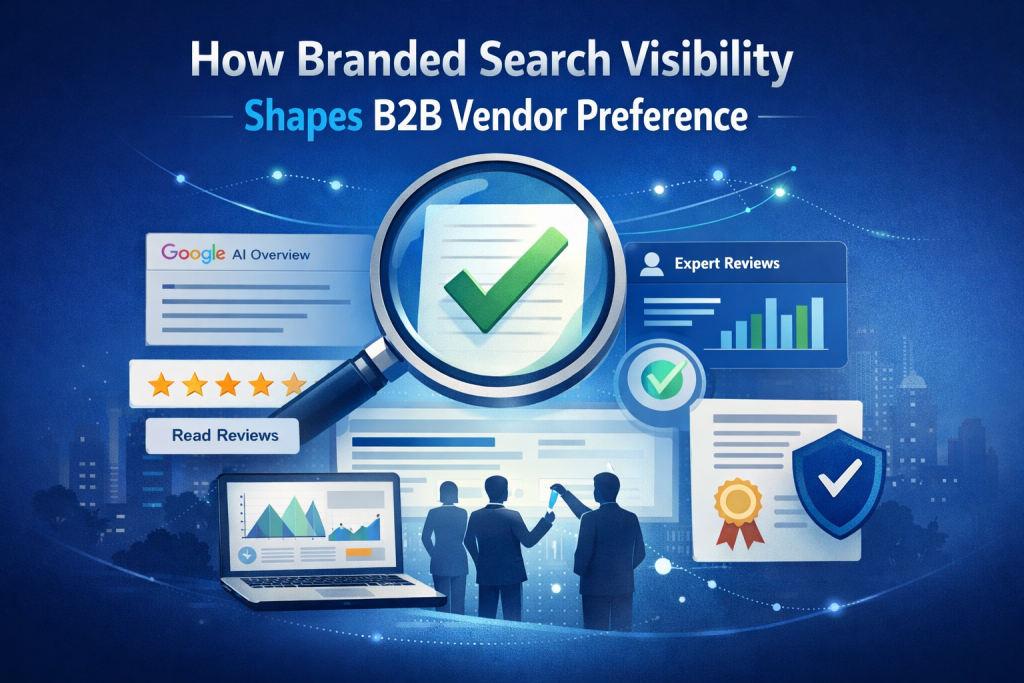
Read moreHow branded search visibility shapes vendor preference before first contact
31 March 2026
Most B2B buyers do not wait for a sales call to decide what they think of you. By the time they reach out, a preference is often already taking shape. The real question is where that preference gets tested. More often than many teams realise, it happens when someone searches your brand. Not because they are ready to buy, but because they want to check whether you feel credible, safe and worth taking seriously. That is what makes branded search visibility commercially important. It is not just about owning your name in Google. It is about what buyers find when
Read moreWhy multi-branch estate agencies keep competing with their own area pages

23 March 2026
Many multi-branch estate agencies assume weak visibility is driven by property portals or competing agents. In reality, the issue is often internal. Their own branch pages, area guides and local landing pages frequently overlap, diluting visibility and confusing search engines. This is not just a rankings issue. It is a structural visibility problem. When multiple pages target similar locations, audiences and intent, Google struggles to determine which page should rank. Generic local SEO advice rarely addresses this. Most frameworks assume a single office with a clearly defined territory, not an agency operating across overlapping patches and multiple branches. The agencies
Read moreWhat the branded queries filter really tells B2B marketers about brand demand

16 March 2026
Most B2B teams talk about brand demand with more confidence than their data deserves. For years, branded versus non-branded reporting has relied on manual filters and rough regex logic, then been treated as if it showed how much real demand the brand had created. It did not. That is why Google’s branded queries filter matters. It gives marketers a more credible way to separate familiarity from discovery and to see whether SEO is only generating discovery, or whether it is also helping create the kind of recall that shapes shortlists and buying decisions later on. What the branded queries filter
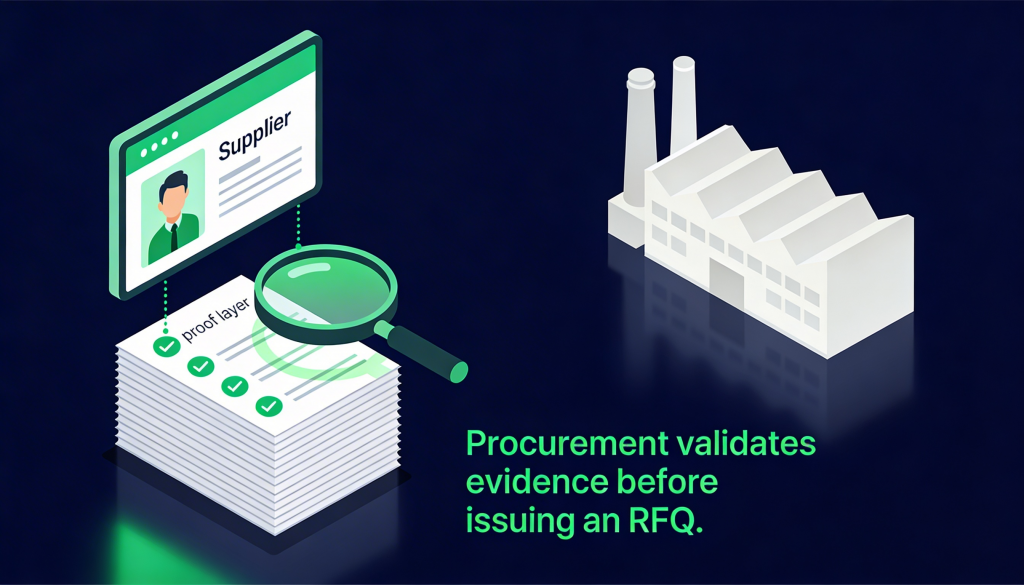
Read moreThe Manufacturing Proof Pack: What Procurement Validates in Google Before an RFQ
02 March 2026
In industrial manufacturing, buyers rarely start with an open-minded browse. More often, they start with a name, a shortlist, or a requirement they must satisfy — and then they use Google to confirm whether a supplier is safe to progress. It explains a common frustration: you can rank for product terms, publish plenty of capability copy, and still lose opportunities because the website doesn’t answer the questions that matter when procurement is doing due diligence. This article is a practical framework for turning “we can do it” into “you can trust it”: the manufacturing proof pack. Why manufacturing validation behaves
Read moreWhy Manufacturing Search Behaviour Is Validation Driven Rather Than Volume Driven

24 February 2026
Manufacturing search behaviour is often misunderstood because it is analysed through a generic digital marketing lens rather than through procurement psychology. In mid-to-large industrial firms across the UK, Europe and North America, search is rarely an open exploration of dozens of unknown suppliers. More often, it is a structured validation process shaped by risk, compliance requirements and internal stakeholder alignment. This article examines how decision-makers in manufacturing companies actually use search engines during supplier selection. Drawing on research from Gartner, McKinsey, Forrester and Google’s B2B studies, we separate evidence from inference and identify what this means for industrial visibility. How
Read moreWhy product-led SEO fails industrial manufacturers

17 February 2026
Industrial manufacturers often assume that if their product pages rank, their SEO strategy is working. On the surface, that seems logical. If a buyer searches for a specific machine model or equipment type and finds you, visibility has been achieved. The reality is more complex. In industrial markets, demand is rarely triggered by a product name alone. It is triggered by a constraint, a requirement, a compliance issue, or a performance limitation. Product optimisation is necessary, but it is not sufficient. Industrial SEO must capture the decision drivers that shape vendor shortlists long before a specific SKU is considered. How
Read more